Tips & tricks
2 min reading time
Steel vs. aluminium garden furniture: What’s the difference and which is right for you?
When choosing new garden furniture, there are plenty of materials to consider. Two popular options are steel and aluminium. Both have their own advantages. Aluminium, for example, is lightweight and easy to move, while steel and other metal furniture tend to be heavier and more robust.
So, which material is right for you? It mainly depends on where you plan to use your furniture, how often you’ll be moving it and how much use it will get.
Aluminium garden furniture: lightweight and easy to move
One of the main advantages of aluminium is its low weight. It’s lighter than steel, making aluminium garden furniture easy to move around.
This can be especially useful if you like to rearrange your table and chairs regularly. Want to follow the sun throughout the day, find a shady spot or clear some space in the garden for an activity? With lightweight furniture, you can move everything around without much effort.
Aluminium is also a practical choice if you like to change the layout of your garden from time to time.
However, its light weight can also be a downside. In areas that are regularly exposed to strong winds, lightweight furniture can be more likely to move or tip over.
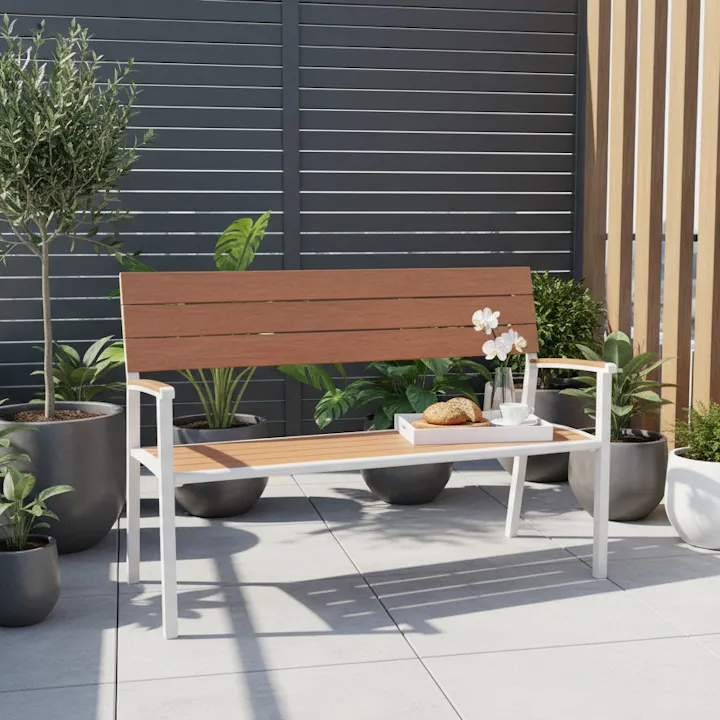
Steel garden furniture: heavy, sturdy and stable
Steel garden furniture is generally heavier than aluminium. This makes it less easy to move around, but it also provides extra stability.
If your garden furniture is in a spot that’s often exposed to strong winds, steel can be a practical choice. The same applies whenever it’s particularly important that your furniture stays firmly in place and doesn’t tip over.
Think of a balcony or rooftop terrace, for example. A piece of furniture that moves or tips over can pose a greater risk there than in an enclosed garden. Heavier steel furniture is generally more stable.
Of course, on a balcony or rooftop terrace, always make sure your garden furniture is positioned safely and cannot be blown away in strong winds.
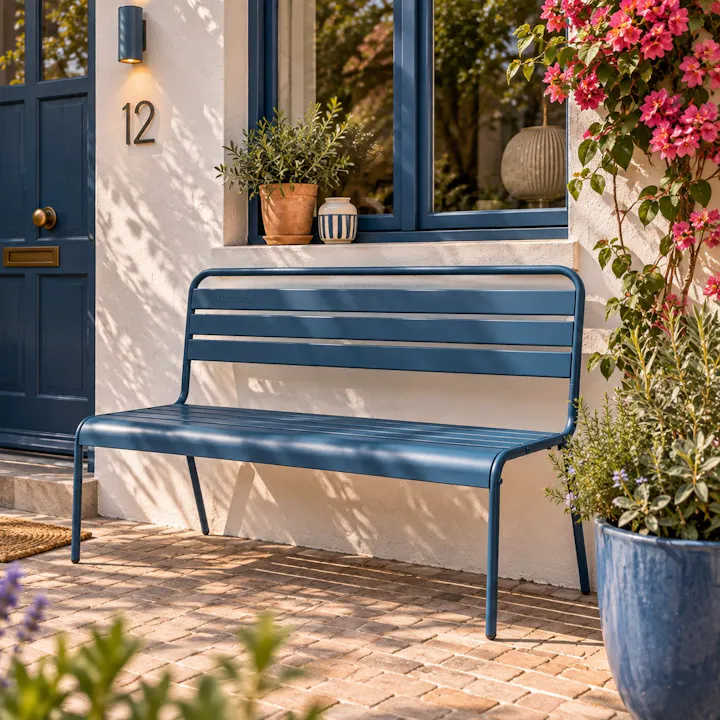
Steel is stronger and less prone to dents
Another difference between aluminium and steel is the hardness of the material. Steel garden furniture is harder and therefore less likely to dent.
This can be especially useful if you use your garden furniture intensively. Do you regularly have family and friends over or host outdoor gatherings? Your tables and chairs are more likely to get the occasional knock or bump.
A chair being pushed against a table or a table bumping into something while being moved can cause dents or damage more easily in softer materials. In situations like these, steel garden furniture can be a practical choice.
Can steel garden furniture rust?
A common question is whether steel garden furniture can rust. The answer is yes, if the protective coating is damaged.
The coating acts as a protective barrier between the metal and the elements. If the coating is scratched deeply or otherwise damaged, moisture can reach the metal underneath. Over time, this can lead to rust.
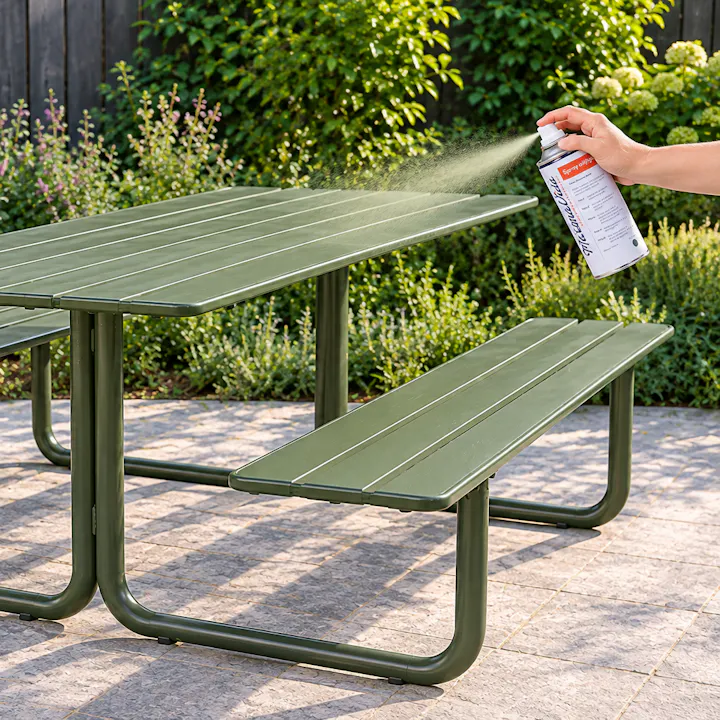
However, a small area of damage doesn’t have to be a major problem. You can usually touch it up easily with a suitable repair spray. It’s best to treat any damage as soon as possible. This helps prevent it from getting worse and restores the protective layer around the metal.
Protect your garden furniture from the elements
Regular cleaning isn’t the only way to keep your garden furniture looking its best for as long as possible.
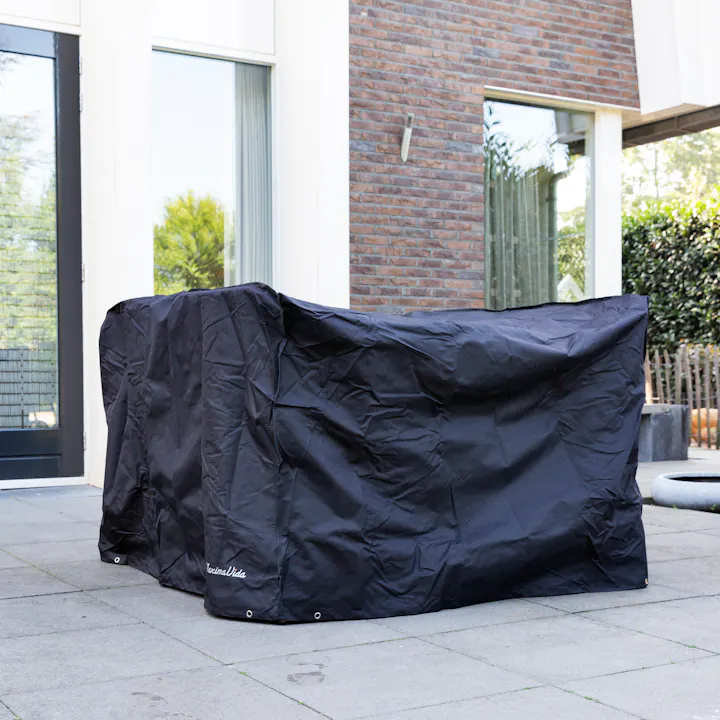
If you can cover your furniture with a protective cover, you can reduce its exposure to rain, dirt and other weather conditions. This can make a real difference, especially when your furniture isn’t being used for longer periods.
Have enough space to store your garden furniture indoors? Even better. Bringing your furniture inside during winter or other extended periods of bad weather significantly reduces its exposure to moisture, frost and dirt.
A combination of regular maintenance, repairing damage promptly and protecting your furniture from the elements can significantly extend its lifespan.
Maintaining aluminium and steel garden furniture
Both aluminium and steel garden furniture benefit from regular maintenance. Dirt, dust and grime can build up on the surface and, over time, affect the protective coating.
That’s why it’s a good idea to clean your garden furniture regularly with water and a mild cleaning product. Avoid harsh cleaners or abrasive sponges, as these can damage the protective coating.
Regular cleaning is a simple way to keep your furniture looking its best and help extend the life of its protective coating.
Steel or aluminium garden furniture: Which is right for you?
Whether aluminium or steel is the better fit depends on how you plan to use your garden furniture.
Aluminium garden furniture could be a good fit if:
- You want to move your furniture around regularly;
- You like to change the layout of your garden;
- You prefer lightweight furniture;
- You want furniture that’s easy to move to a different spot.
Steel or other metal garden furniture could be a good fit if:
- Your furniture is placed in a spot that’s often exposed to strong winds;
- You value extra stability;
- You want to place your furniture on a balcony or rooftop terrace;
- Your furniture will be used frequently;
- You regularly host parties or gatherings;
- You’re looking for furniture that’s less prone to dents.
Conclusion
There’s no single material that’s the best choice for everyone. Aluminium is particularly well suited if you value lightweight furniture that’s easy to move, while steel or other metal furniture is a great option when stability, strength and durability are more important.
So, when choosing garden furniture, don’t just consider how it looks. Think about where you’ll use it and how you plan to use it. With regular maintenance and by protecting your furniture with a cover or storing it indoors when possible, you can enjoy both aluminium and steel garden furniture for many years to come.