Tips & tricks
3 min reading time
What sort of garden furniture is suitable for a roof terrace?
A roof terrace is a lovely place to sit outdoors. You often have plenty of space, plenty of light, and can turn an unused roof into a fully-fledged outdoor space. However, choosing garden furniture for a roof terrace requires different considerations to those for furnishing a normal garden. Wind, sun, weight, maintenance and safety all play an important role.
What sort of garden furniture is suitable for a roof terrace? Above all, opt for furniture that is sturdy and stable, can withstand various weather conditions and fits the available space. Metal and aluminium garden furniture, for example, are interesting options. But don’t just look at the material. The best layout is achieved when you first take a good look at the conditions on your roof terrace.
1. Check where the sun is
On a roof terrace, the sun can be quite intense. There are often fewer trees, buildings or other features to provide natural shade. So, before you arrange your garden furniture, check how the sun moves across the terrace throughout the day.
Do you mainly get morning sun? Then a small dining area makes a lovely spot for breakfast and a coffee. If, on the other hand, the terrace faces west and you get plenty of sun at the end of the day, a lounge area can be a wonderful place to round off the day.
Also bear in mind the material and colour of your garden furniture. Dark surfaces can get quite hot in direct sunlight. A parasol or other form of sunshade can therefore be a practical addition, provided it can be set up safely and is wind-resistant.

2. Bear in mind that it can be windy on the roof terrace
Wind is one of the most important factors to consider when furnishing a roof terrace. The higher the terrace is situated and the more open the surroundings are, the windier it is likely to be. A lightweight chair that remains perfectly stable in a sheltered back garden may be less practical on a high roof terrace.
You should therefore opt for sturdy garden furniture with sufficient stability. Steel garden furniture, for example, is a good choice for locations where it is regularly windy, thanks to its weight. Aluminium, on the other hand, is lighter and therefore easy to move, but requires extra care on a windy roof terrace.
Don’t just think about tables and chairs. Loose cushions, planters, parasols and accessories can also catch the wind. So keep the terrace practical and ensure that loose items cannot be blown across the terrace by a strong gust of wind.
3. Choose low-maintenance garden furniture
Above all, a roof terrace should be a place where you enjoy spending time, not somewhere you’re constantly cleaning and maintaining. Low-maintenance materials are therefore a sensible choice.
Powder-coated metal, aluminium and plastic, for example, are relatively easy to clean. Dirt and dust can usually be removed with water, a soft cloth or brush and a mild cleaning product.
Wooden garden furniture has a warm, inviting look, but generally requires a bit more maintenance. Which material suits you best therefore also depends on how much time you want to spend maintaining your roof terrace.
4. Take fire safety precautions
Fire safety deserves extra attention on a roof terrace, particularly in apartment blocks, offices, hospitality venues and other shared buildings. You should therefore check which regulations apply to your building before purchasing furniture and accessories.
For example, consider the materials used and exercise caution with open flames, barbecues, fire pits and patio heaters. In commercial projects, additional requirements may also apply regarding escape routes and the fire safety of the furnishings.
The layout also plays a role. Do not fill a roof terrace completely; ensure that passageways and any escape routes remain easily accessible.
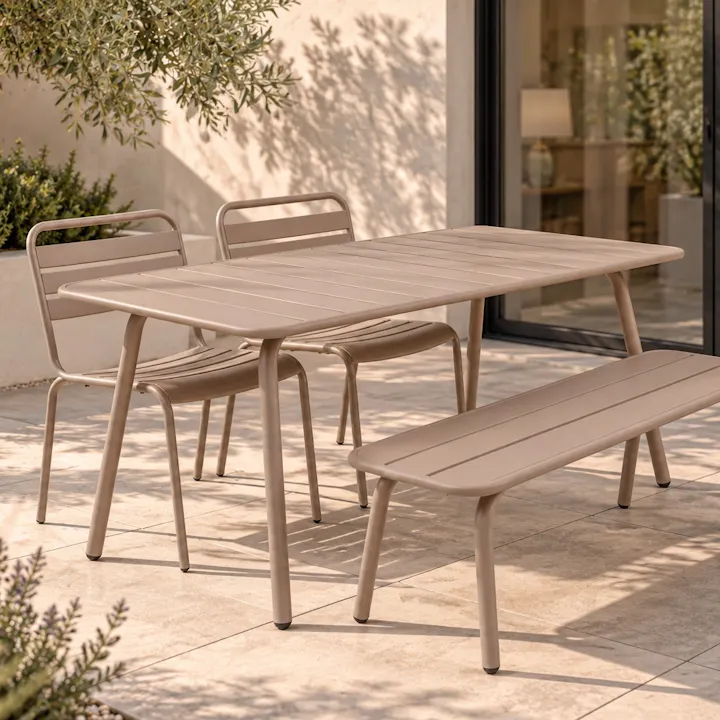
5. Check for differences in weight and height
You cannot place an unlimited amount of weight on a roof. Large planters, heavy tables and other items can add up to a considerable weight. You should therefore always check how much load the roof structure can bear. If in doubt, it is best to have this assessed by an expert.
Also, be aware of any differences in floor level. Roof terraces, for example, often have a slope to allow rainwater to drain away. This means that a table or chair will not automatically be stable everywhere.
Where possible, choose furniture with adjustable feet or place it on a level part of the terrace. At the same time, ensure that rainwater can continue to flow freely towards the drain.
6. Give garden furniture different uses
A roof terrace is often smaller than a garden. So make the most of your furniture.
A sturdy dining table isn’t just a place to eat; it can also be used for working, having a drink or enjoying a lavish meal. A sofa provides multiple seats without the need for loose chairs everywhere. A stool can serve as both a seat and a side table. Fold-away furniture is handy if you regularly want to use the available space in different ways.
Make a list in advance of what you want to do on the roof terrace. Do you mainly want to eat, relax, work, sunbathe or entertain guests there? This will help you avoid buying furniture that looks nice but is hardly ever used in practice.

7. Divide the roof terrace into different zones
Do you have a larger roof terrace? If so, divide it into different areas. That way, a single large open space will soon feel like a proper outdoor room.
For example, create a dining area close to the entrance and set up a lounge area in the part of the terrace that gets the most sun at the end of the day. A freestanding garden bench, on the other hand, can be a lovely spot for a cup of coffee.
You don’t need to create these zones with walls or large partitions. Different pieces of furniture, planters or an outdoor rug can be enough to give each area its own function.
8. Decide on your budget in advance
Furnishing a roof terrace involves more than just a table and a few chairs. You should also consider planters, lighting, sunshades, any flooring and accessories.
So, set a total budget in advance. Start by investing in the furniture you use most often. Do you enjoy having friends round? Then perhaps allocate more of your budget to a good table with plenty of seating. Do you mainly use the roof terrace to relax? In that case, a comfortable lounge area might be more important.
What’s more, you don’t have to buy everything all at once. Start with the basics and expand the décor later.

Which materials are suitable for garden furniture on a roof terrace?
For a roof terrace, materials that are suitable for outdoor use and do not require too much maintenance are particularly worthwhile.
Steel is sturdy, stable and has sufficient weight for locations where wind is a factor. A good protective coating helps to shield the material from the elements.
Aluminium is low-maintenance and lightweight. This makes the furniture easy to move around, but on a very windy roof terrace, you need to pay close attention to its stability.
Plastic is practical, low-maintenance and available in many shapes and colours. Here too, the weight of the furniture is important if the terrace is exposed to strong winds.
Wood creates a natural and warm look, but, depending on the type of wood, it requires more maintenance.
What garden furniture should you choose for a small roof terrace?
On a small roof terrace, every square metre counts. So it’s better to choose a few pieces of furniture that you actually use rather than filling the terrace to the brim.
A compact bistro set, for example, is ideal for two people to have a meal or a coffee. A garden bench makes efficient use of the available width, and a side table or stool can serve multiple purposes. Fold-away furniture also allows you to quickly create extra space.
Measure the terrace carefully beforehand and leave enough space to walk comfortably between the pieces of furniture.
From an empty roof to an outdoor spot where you’ll want to linger
The best garden furniture for a roof terrace isn’t necessarily the lightest, heaviest or most expensive. It’s all about the combination of stability, maintenance, safety, comfort and practicality.
So start by taking a look at your roof terrace itself. Where does the sun shine? Which direction does the wind usually come from? How much weight can the roof bear? Are there any changes in level? And what do you want to be able to do on the terrace?
Once you’ve clarified that, you can choose garden furniture much more effectively. From a compact bistro set for your first coffee of the day to a large table where you can sit with friends until late. That way, a bare roof doesn’t become a collection of furniture, but an outdoor space that’s actually used.